
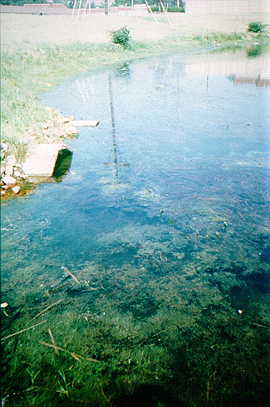
 As stormwater runs across lawns, driveways, streets and parking lots, it picks up pollutants and debris, including sediment, fertilizer, pesticides, motor oil, heavy metals, toxic chemicals, yard and pet waste. Dan Smith of the Friends of Lower Beaverdam Creek provides a recap and raises important questions regarding the MD House’s changes to an important 2007 law intended to tighten stormwater regulations statewide. In 2007, the Maryland Home Builders supported the stormwater legislation, but–after three years and with the implementation date looming–they’ve reconsidered and really want some changes. The bill described below grandfathers in an unknown number of development projects –exempting them from upcoming stronger stormwater management standards. Please write your delegates and senator, copying the members of the AELR Committee and your county council member NOW to share your opinion about yet another delay in addressing our area’s environmental health. Attend Tuesday’s hearing or submit written testimony.
How, when and where to address the most severe water pollution problem for this region and the Chesapeake Bay–untreated stormwater runoff–is at stake. The process that led to the passage last Friday, March 26 of HB 1125, the Holmes Bill, was hardly a reasoned compromise and the outcome will damage the environment.
Developers to General Assembly: We know what we should do and can do, we just don’t want to do it.
Expert colleagues tell me that every provision included in HB 1125–and the parallel  Emergency Regulations that now await a Tuesday hearing and vote in a joint legislative committee–is a setback from the regulations now scheduled to take effect on May 4th. We are just ONE MONTH away from the effective date of the 2007 state law and without an open public hearing and an extremely limited and truncated process, the Environmental Matters Committee gave into the demands of a vocal subset of developers who will never voluntarily implement green building and development practices. The result will be the continued degradation of our waterways and the Bay, and decades of new pollution for every project that is built to the old standards. The practices we are talking about here are not rocket science; some were even pioneered here and have been scaled up big time in communities across the country.
This is akin to deciding to require new building codes to earthquake proof the schools, hospitals, and homes in a quake prone area, only to at the last minute expand the categories of projects that will be exempt from those regulations — or that half decent development attorneys can easily argue their way out of.
The Bailouts Continue Here
Why was anything needed to relieve this sector of the development community and their bankers and attorneys and their old school engineers from the obligation to do their part, as leaders of the private development process, to integrate best practices into their operations which affect us all? This community has had ample time, opportunity and resources during the boom years to become involved in the three-year long regulatory process, and to put green development projects into the pipeline that would meet the standards of the pending regs. If they cannot do this, they should not build. Will the cost to redesign such projects be of such harm to the state economy, or lead to a Republican groundswell in November, that we lower the bar for Bay cleanup? Are these developers just too big to fail? Isn’t this the perfect time and opportunity for them to be reworking their projects to meet the needs and our communities when the economy improves enough to build again? Other sectors are tightening their belts and adjusting to the new reality of the times. Why do these guys get a pass?
The Bay is Dying. The Feds are Moving One Way. Maryland the other.
Given the grave and deteriorating condition of the Bay, a new commitment from this White House, a new regional coalition to pull major new funding into Bay cleanup efforts, and a coming Earth Day announcement from our Congressional delegation that will describe in detail the thousands of projects (at hundreds of millions of dollars) needed just to begin cleaning the Anacostia by retrofitting outmoded practices (like those to be permitted to continue here), it is a real setback that so many in Annapolis are buying the argument that the law passed in 2007 is too stringent. There have been THREE YEARS of meetings, hearings, proposed rules, comments and more comments resulting in the already compromised rules that will go into effect unless this legislature takes action to weaken them in the next two weeks.
Please, just leave the old regs alone. Oppose the Emergency Regs.
To have any chance of restoring our streams and having them contribute to livable communities, we need quality development and redevelopment that controls both water quality and volume. Experts who have studied the new bill and regs conclude that they will 1) allow any and all projects in the easily designated Priority Funding Areas to get waivers from volume control requirements for existing paved areas, and 2) add 5 categories of redevelopment projects eligible for waivers from environmental site design. One category is so broad as to include any project necessary to accommodate growth consistent with the comprehensive plan” for the area. Is there any development attorney who can’t drive a truck through that one?
Make work for development attorneys, not green engineers.
Shifting decades old practices of the planning and development communities is not easy or trivial. It will take time, it has taken time. It will not occur without steadfast, steer-the-course political leadership. The more you let developers chip away at the standards, the longer this important change will take. Let the old guard step aside and bring on the new, energetic and innovative designers and practices of the 21st Century. Catch the fever. Be the change. What innovative biotech or hi-tech company wants to relocate to a development that is years behind best practices? What kind of attraction is that to employees?
For further evidence, here is a side-by-side comparison of the various pending and proposed regs and legislation. This is much more accurate than the version distributed by proponents of HB1125 at the committee hearing last week to which NO critic was allowed to testify, including a former US Senator, US Rep., and Governor who were all against the bill, and so remain, along with an overwhelming number of community activists and environmentalists.
Lowering the bar honors a bad bill.
I completely agree that the original Holmes Bill was outrageous and should have been defeated. How then did it come to justify and become the vehicle for this weakening of the law? There is no environmental, progressive or smart growth organization that I am aware of in the Anacostia Watershed or in Prince George’s County that agrees with or supports the position you defend.
We ask the public and elected officials to listen and question our case on Tuesday, April 6 at 4 pm for the FIRST and only opportunity we will have to ask the Assembly to let the process unfold without new legislative intervention. We thank Sen. Paul Pinsky and Del. Anne Healey, co-chairs of the Administrative, Executive & Legislative Review Joint Committee, for calling this hearing. Unfortunately, due to lack of full and open discussion to date and the incredible momentum behind the poor information that is circulating, this is an uphill battle for us. We know that even if the AELR Committee rejects the rollback Emergency Regs, that we’ll have to challenge them again two days later in the Senate in the form of HB1125.–Dan Smith, Co-Chair, Friends of Lower Beaverdam Creek
Visit here for more information on the importance of stormwater management in our area. Then write your elected officials.
 Fun new meetings on our

 This holiday season keep your




 (actually anyone can).
 Route 1 Growth

